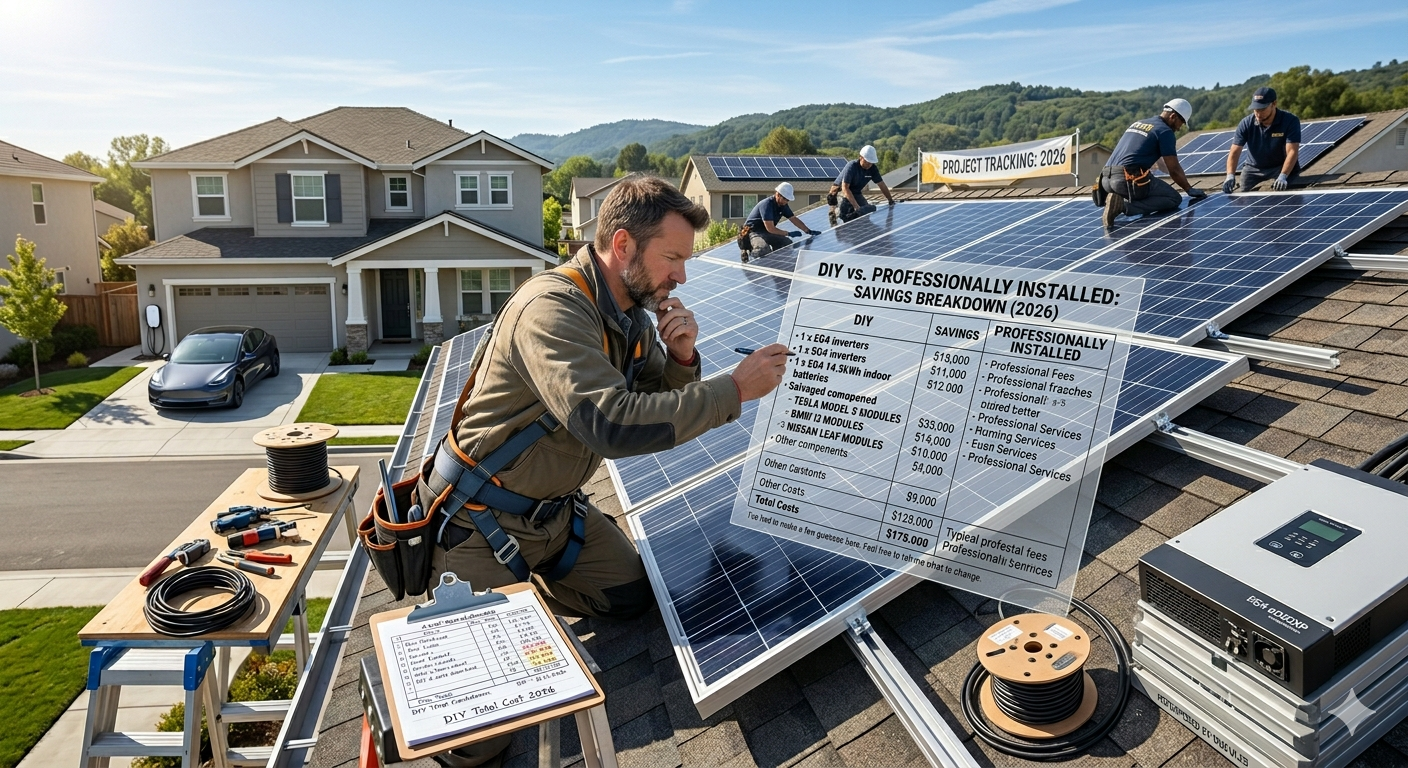
The savings from going DIY on solar are real and significant — we’re talking $8,000 to $15,000 on a typical home system. But those savings come with tradeoffs around time, skill, warranties, and risk. This isn’t a post that’s going to tell you one option is always better. It’s going to give you the honest breakdown so you can make the right call for your specific situation.
The Core Cost Difference
Professional solar installers charge a national average of $2.75–$3.25 per watt installed in 2026. DIY components run $1.20–$1.80 per watt. For an 8 kW system — a size that covers most American homes — that’s a difference of roughly $10,000–$15,000.
Where does the professional markup come from? Mostly overhead: labor, workers’ comp insurance, marketing and sales costs, administrative expenses, and profit margin. When you do it yourself, you eliminate all of that. You’re paying for parts and your own time — nothing else.
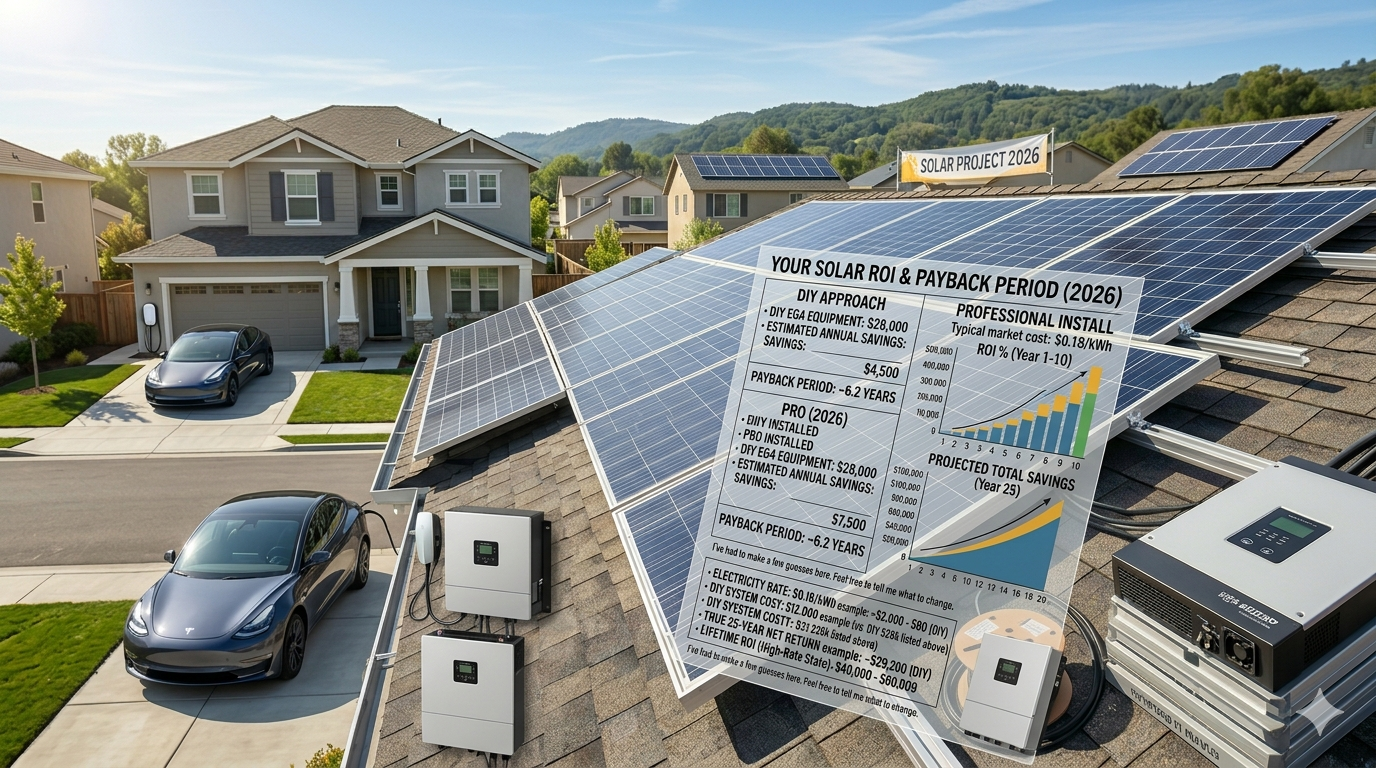
The DIY route also typically delivers a faster payback period. A grid-tied system can pay for itself in 3–6 years for a competent DIY install, versus 5–9 years for a professionally installed system at retail pricing — and that’s before factoring in the now-expired federal tax credit.
The Case for DIY Solar
Massive Upfront Savings
On a 5 kW system, DIY saves you roughly $7,000–$10,000. On a 10 kW system with battery backup, you’re looking at $15,000–$28,000 in savings. For a lot of households, that’s the difference between solar being financially viable or not.
Full Control Over Components
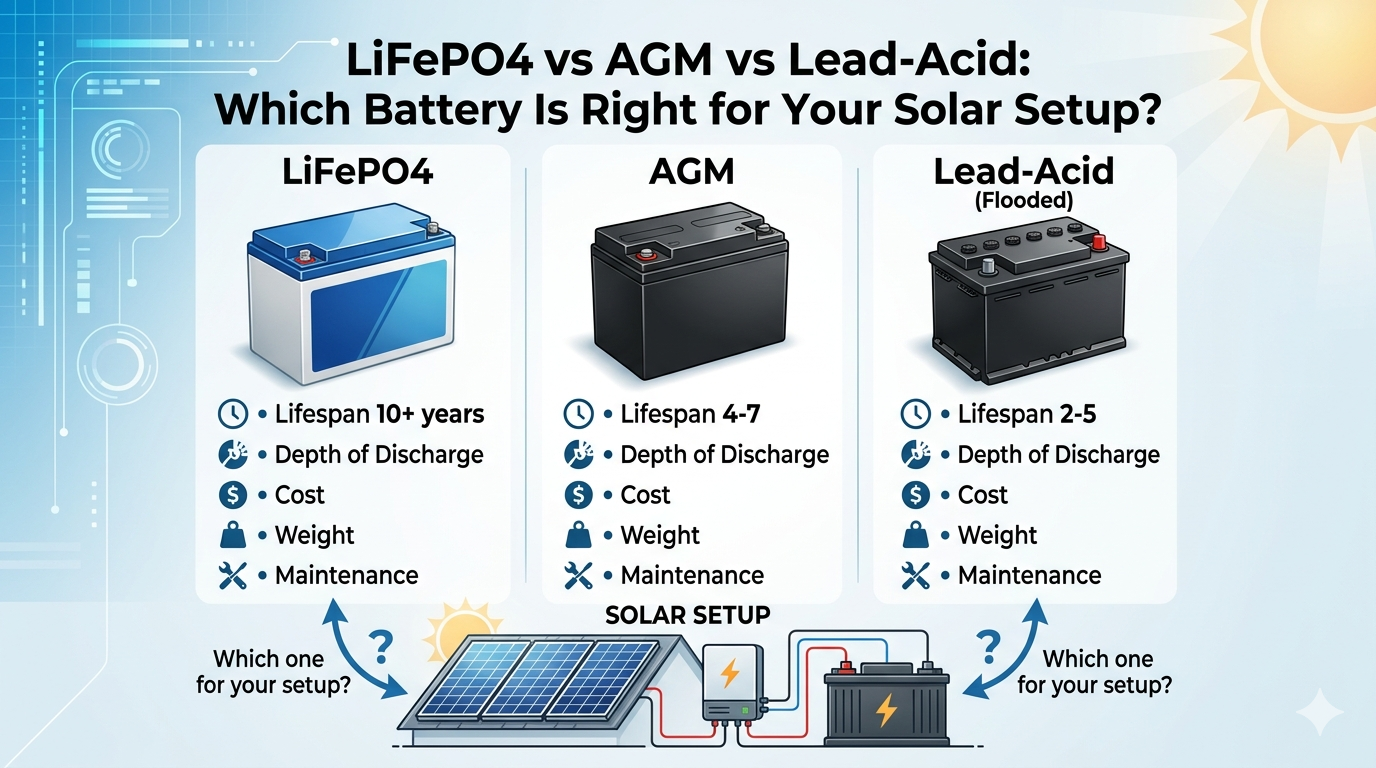
When you hire a professional, you get whatever equipment they prefer to work with — often mid-range components with better margins for them. When you go DIY, you can choose exactly the panels, inverter, and batteries that meet your needs. Want premium N-type panels and a Victron inverter? You can have them.
Faster Timeline
Professional installers often have project backlogs of weeks or months. When you source your own equipment and do the work yourself, you move at your own pace. Many motivated DIYers complete their installations in a single weekend once permits are approved.
Deep System Knowledge
There’s a practical benefit to building your own system that’s easy to overlook: you understand every part of it. When something needs adjustment or troubleshooting years down the road, you’re not dependent on calling someone out for a service visit.
The Case for Hiring a Professional
Warranties on Labor and Performance
A licensed installer typically warrants their work for 5–10 years. If something fails due to installation error — improper mounting, wiring mistakes, water infiltration — they fix it at no cost. DIY means you own the mistake. Some component manufacturers also only honor warranties when the product is installed by a certified professional, which is worth checking before you buy.
Better Access to Equipment Pricing
Professional installers buy in volume and often have wholesale access to equipment that costs more at retail. In some cases, you may end up paying more per panel as a DIYer than a professional does — partially offsetting the labor savings on smaller systems.
System Design Expertise
A good installer will model your specific roof, shading patterns, and energy usage to optimize panel placement and system sizing. DIY requires you to do this research yourself — and mistakes in system design are expensive. Slightly wrong string sizing or ignoring a shading problem from a neighboring tree can meaningfully cut your system’s output.
Permitting and Interconnection Handled for You
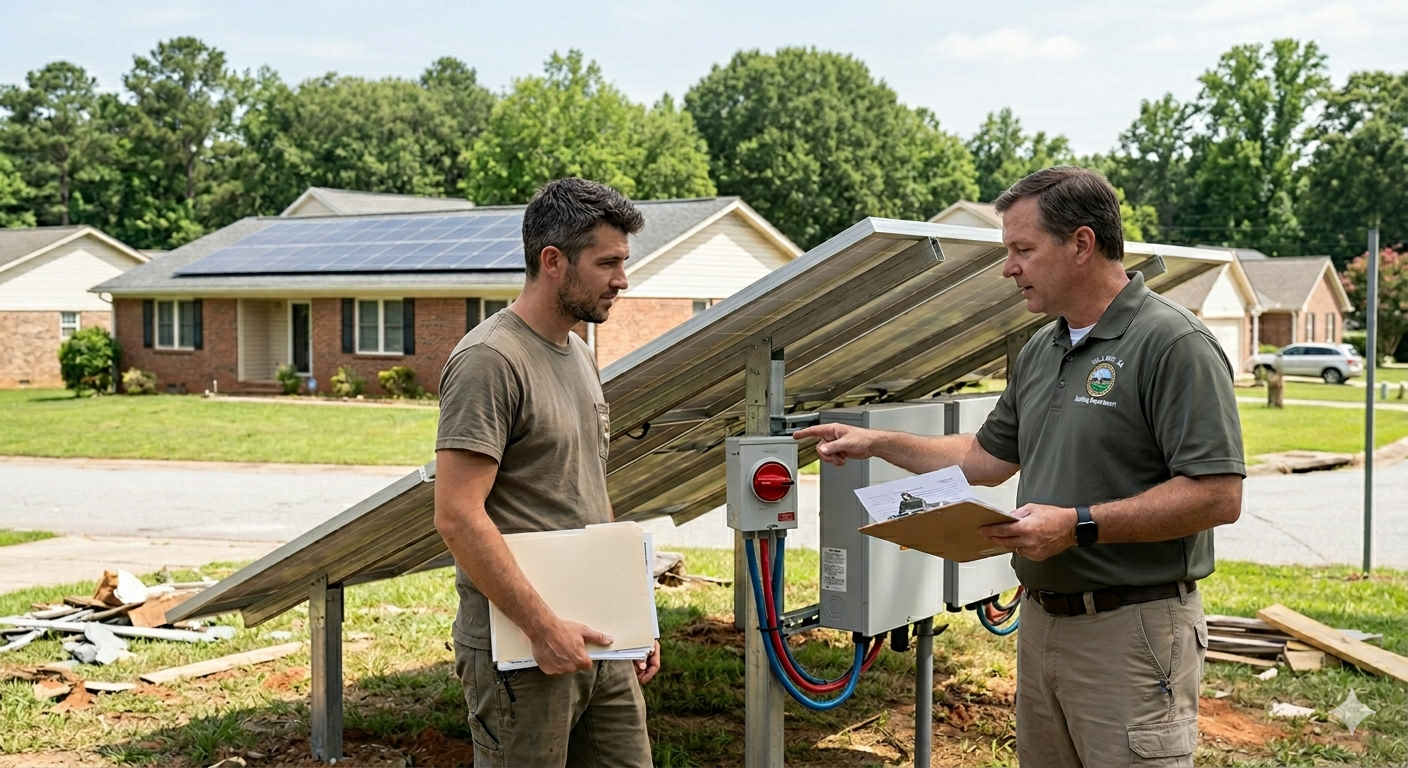
The permitting process — which we covered in our solar permits guide — is manageable for DIYers but takes time and attention to detail. Professional installers handle all of it as part of their service, including utility interconnection applications and inspection scheduling. For busy homeowners, this alone can justify the premium.
Roof Warranty Protection
Improperly mounted racking can void your roof warranty. A licensed contractor’s installation is typically covered under both the solar installation warranty and your homeowner’s insurance. DIY installations can create gray areas with your insurer if a roof leak is traced back to panel mounting — something worth discussing with your insurance provider before you start drilling.
Who Should Go DIY?
You’re a good candidate for DIY solar if:
- You’re comfortable with basic electrical work and have done DIY home projects before
- You have a straightforward, single-plane, unshaded roof
- You’re willing to invest 40–80 hours in research, permitting, and installation
- You’re building a smaller system (under 10 kW) where the complexity is manageable
- You want maximum control over component selection
- You’re installing an off-grid or battery-only system where interconnection isn’t required
Who Should Hire a Professional?
A professional installer makes more sense if:
- You have a complex roof (multiple planes, steep pitch, significant shading)
- You’re not comfortable on a roof or with electrical systems
- Your home has older wiring or a 100-amp panel that may need upgrading
- You’re in a jurisdiction with complex permitting requirements
- Long-term warranty coverage is a priority
- You simply don’t have the time — professional teams can complete an installation in 1–2 days
The Hybrid Approach: The Best of Both Worlds
Here’s what a lot of experienced solar DIYers actually recommend for first-timers: buy your own components, do the physical installation yourself, and hire an electrician for the final panel connection and inspection sign-off.
This approach captures 70–80% of the DIY savings while dramatically reducing the two biggest risks: electrical mistakes and permit issues. A licensed electrician for a one-day final connection visit typically costs $500–$1,200 — a small fraction of what a full professional install costs, and it gets you a licensed sign-off that satisfies most jurisdictions and keeps your homeowner’s insurance happy.
Bottom line: The labor savings from DIY solar are real and significant. Whether they’re worth it depends entirely on your skill set, your roof complexity, and how much your time is worth. Do the hybrid approach if you’re unsure — it’s the lowest-risk path to serious savings.
Side-by-Side Comparison
| Factor | DIY | Professional | Hybrid |
|---|---|---|---|
| Upfront cost (8 kW) | $10,000–$14,000 | $22,000–$28,000 | $11,500–$15,500 |
| Payback period | 3–6 years | 5–9 years | 4–7 years |
| Labor warranty | None | 5–10 years | Partial |
| Component control | Full | Limited | Full |
| Permitting handled | You | Installer | You |
| Time investment | 40–80 hrs | Minimal | 30–60 hrs |
| Best for | Skilled DIYers | Complex roofs, busy homeowners | Most first-timers |
Related posts you might like:
→ How Much Does a DIY Solar Setup Actually Cost in 2026?
→ Solar Panel Payback Period: How to Calculate Your Real ROI
→ How to Navigate Solar Permits Without Losing Your Mind