Power outages are up. Utility rates keep climbing. And the gap between what a professional solar install costs versus what you can do yourself has never been wider. In 2026, DIY solar battery backup kits have become one of the smartest home investments you can make — if you pick the right one. This guide breaks down what’s worth buying, what to avoid, and how to size your system for your actual needs.
Why DIY Solar Battery Backup Is Booming in 2026
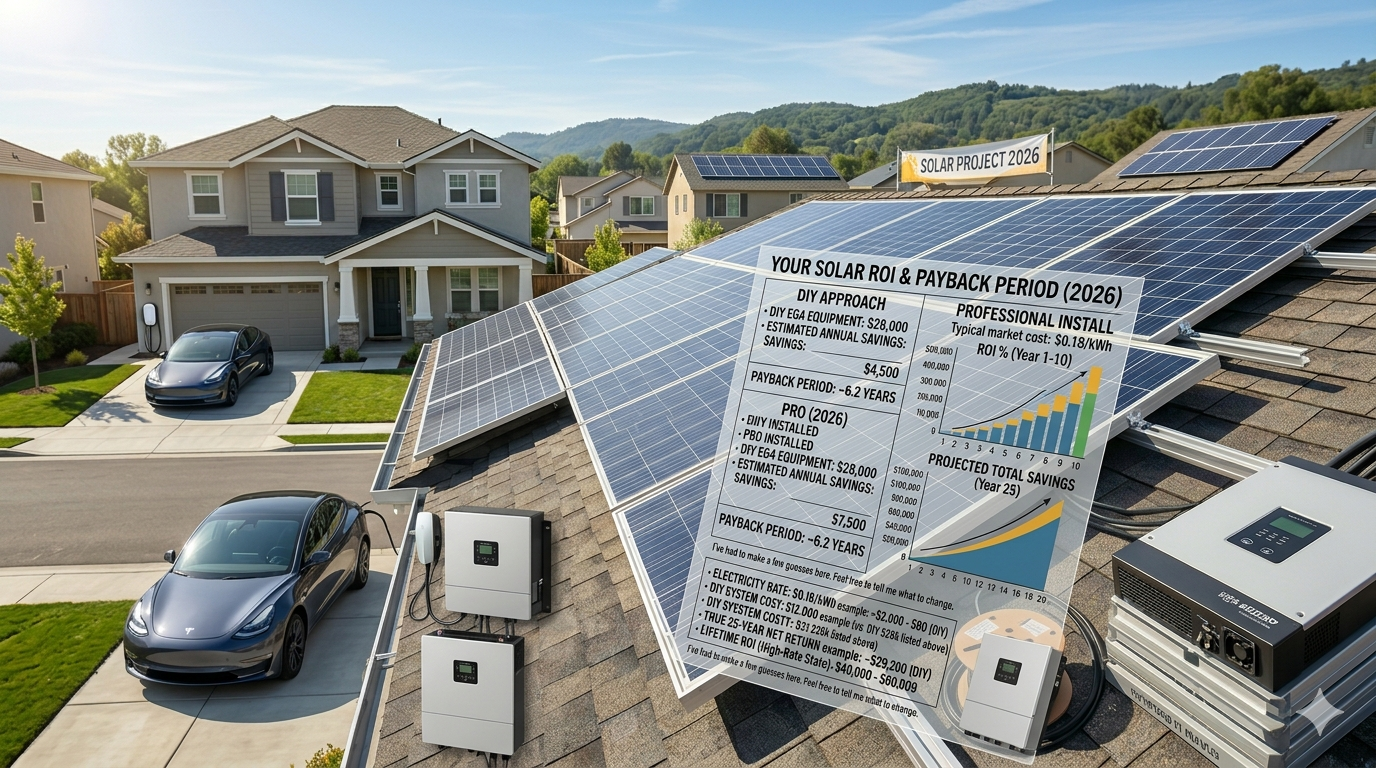
The math has gotten impossible to ignore. A professionally installed 5 kW solar battery system can run anywhere from $40,000 to $60,000. A comparable DIY setup? Closer to $8,000–$15,000. That’s not a small difference — that’s a second car, a home renovation, or years of utility bills back in your pocket.
Add in rising electricity rates (up 5–8% in states like California and Maine this year alone) and more frequent grid outages, and it’s clear why DIY solar battery kits are one of the fastest-growing segments in the home improvement space. People aren’t just doing this for environmental reasons anymore. They’re doing it for financial survival.
The Core Components of Any DIY Solar Battery Backup Kit
Before you buy anything, you need to understand what you’re actually assembling. A complete backup system has four main parts:
- Solar Panels — Generate DC electricity from sunlight. In 2026, N-type monocrystalline panels hitting up to 25% efficiency are the standard worth shopping for.
- Charge Controller (MPPT) — Regulates the power flowing from panels into your batteries. MPPT controllers are significantly more efficient than older PWM models.
- Battery Bank — Stores the energy. This is the most important (and most expensive) decision you’ll make. More on this below.
- Inverter — Converts stored DC power into the AC power your home appliances actually use. Always go pure sine wave for sensitive electronics.
Many modern kits bundle all four into one package, which simplifies compatibility headaches. If you’re buying components separately, make sure everything is rated for the same system voltage — 48V systems are the sweet spot for most home setups because they’re more efficient and reduce wire losses.
The Battery Question: LiFePO4 Is the Only Answer
If you take nothing else from this post, take this: buy LiFePO4 (lithium iron phosphate) batteries. Not AGM. Not lead-acid. Not standard lithium-ion.
Here’s why LiFePO4 has become the gold standard for home solar storage in 2026:
- Cycle life: 8,000–10,000+ charge/discharge cycles at 80–90% depth of discharge. That’s 10+ years of daily use.
- Safety: Thermal runaway (the thing that makes lithium-ion batteries catch fire) is almost unheard of with LiFePO4 chemistry.
- Usable capacity: You can actually use 80–90% of rated capacity, versus ~50% with lead-acid before you risk damaging them.
- Weight and space: Far lighter and more compact than lead-acid for equivalent storage.
For most DIY builders in 2026, the EG4 LL-S 48V 100Ah is the best all-around pick — it has a strong built-in BMS, a heating element for cold climates, and comes in at roughly $120/kWh. On a tighter budget, the LiTime 12V 200Ah delivers solid performance at around $95/kWh. Want the best BMS and Bluetooth monitoring on a 12V system regardless of price? The SOK 206Ah leads that category.
Quick tip: Pre-built LiFePO4 batteries currently range from about $78/kWh to $330+/kWh. The sweet spot for most home builders is $88–$120/kWh — anything higher usually isn’t buying meaningfully more reliability at this point.
Portable Power Stations vs. Component-Based Kits: Which Is Right for You?
There are two main approaches to DIY solar battery backup, and they serve very different needs.
Portable Power Stations (All-in-One)
These are self-contained units — battery, inverter, and charge controller built into one box. Brands like EcoFlow and Anker SOLIX dominate this category. The EcoFlow DELTA 2 is a popular choice: LiFePO4 chemistry rated for 3,000+ cycles, 0–80% charge in around 50 minutes, and expandable up to 3kWh. The Anker SOLIX C1000 Gen 2 is another strong option, delivering 2,000W continuous and 3,000W peak with a 49-minute full charge.
Best for: Renters, temporary setups, RV and van life, emergency-only use, or people who want zero installation complexity.
Tradeoffs: Higher cost per kWh, limited expandability, not designed for whole-home backup.
Component-Based DIY Kits
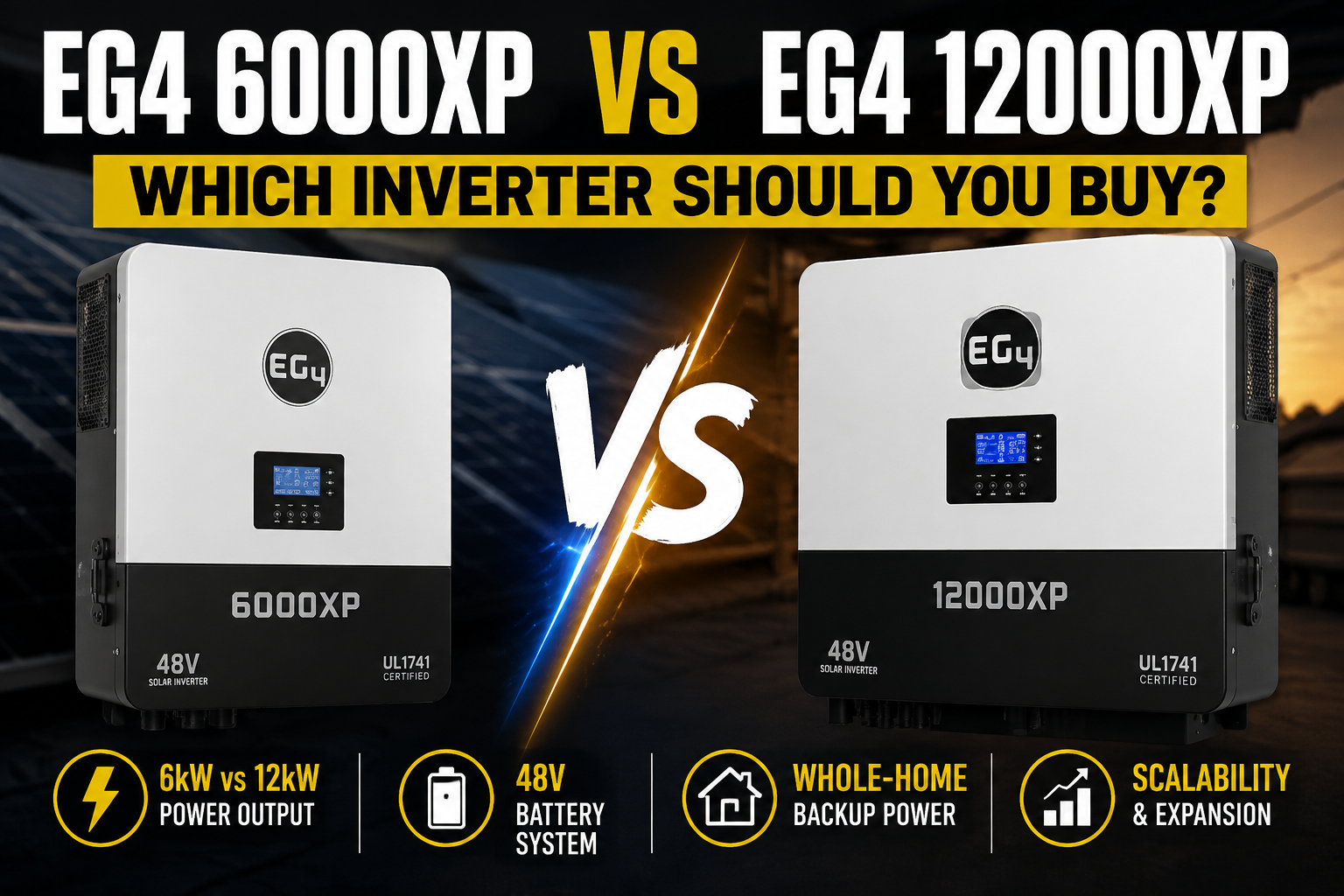
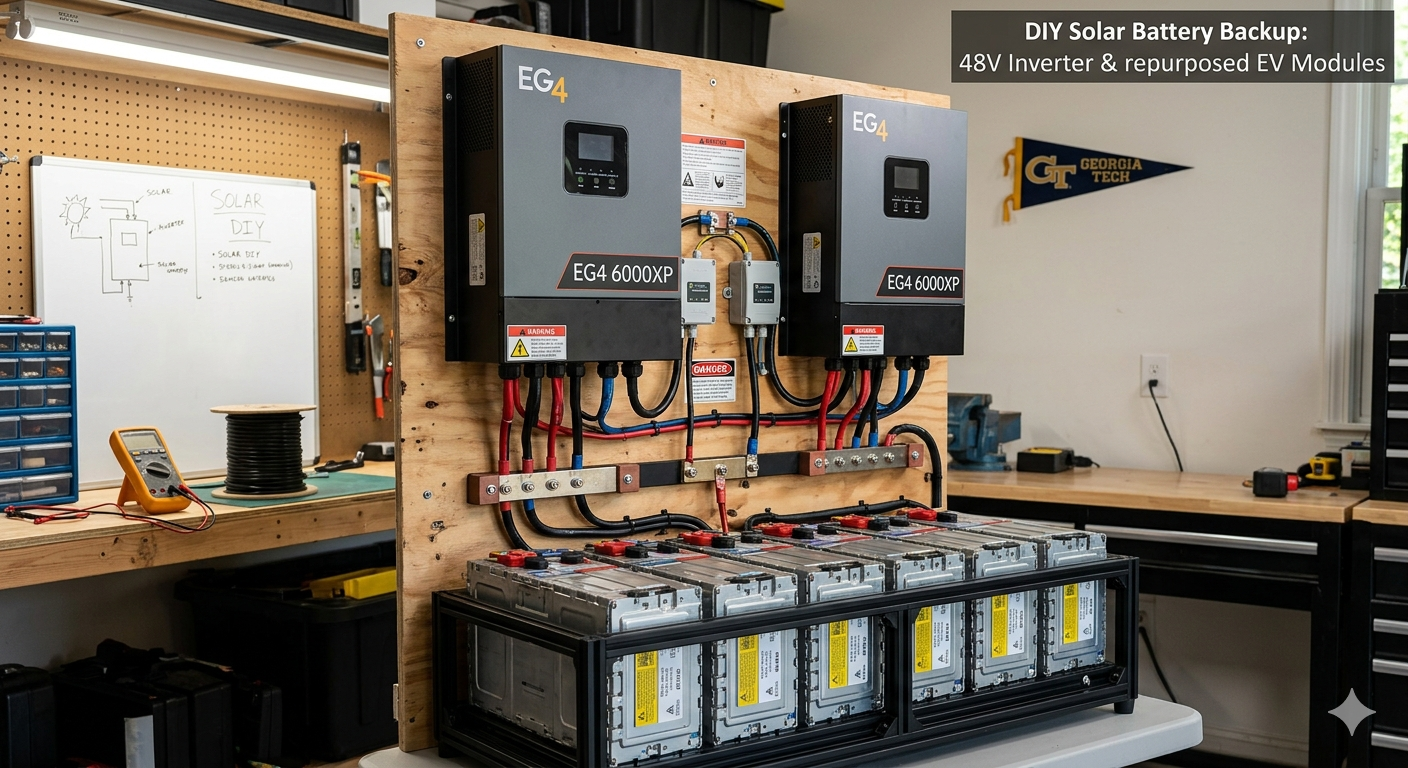
This is where serious home backup lives. A good example: a 48V system with a 4.8kWh LiFePO4 battery bank, twelve 195W monocrystalline panels (2,340W total), and a 5,000W pure sine wave all-in-one inverter with an 80A MPPT charge controller. Under 4 hours of good sun, that setup generates roughly 9.4 kWh per day — more than enough to cover the essentials for most households.
Best for: Homeowners wanting a permanent installation, daily self-consumption, whole-home or partial-home backup, and long-term ROI.
Tradeoffs: More planning required, may need permits depending on your municipality, and you’re managing component compatibility yourself (or buying a matched kit).
How to Size Your System: A Simple Starting Point
You don’t need to be an engineer to figure out what size system you need. Start with these three questions:
- What do you need to power? Make a list of essential appliances — fridge, lights, phone/laptop charging, router, maybe a window AC. Look up wattage for each (usually on the device label or manufacturer website).
- For how long? Do you want 8 hours of backup? 24 hours? Through a multi-day outage?
- How many sun hours do you get? Most of the continental US averages 4–6 peak sun hours per day. Check a solar map for your specific region.
As a rough rule of thumb: multiply your daily watt-hour needs by 1.25 (to account for system inefficiencies), then divide by your average peak sun hours to get your required panel wattage. Double your daily needs for battery capacity to ensure you have a full day of reserve.
Mistakes to Avoid
These are the most common (and costly) errors first-time DIY solar builders make:
- Undersizing the battery bank. People consistently underestimate how much they actually use, especially when running a fridge 24/7.
- Mixing battery chemistries or ages. Never mix old and new batteries in the same bank. Never mix LiFePO4 with lead-acid.
- Skipping the MPPT controller. PWM controllers are cheaper but can waste 20–30% of your panel’s potential output. MPPT pays for itself quickly.
- Ignoring local permit requirements. Grid-tied systems almost always require permits. Even some off-grid setups do. Check with your municipality before you install.
- Cheap inverters on sensitive electronics. Modified sine wave inverters can damage motors, medical equipment, and some appliances. Always go pure sine wave.
Final Verdict: Is a DIY Solar Battery Backup Kit Worth It?
For most homeowners in 2026 — yes, emphatically. The technology has matured, the costs have dropped, and the payback period has shortened dramatically as utility rates climb. LiFePO4 batteries now offer 10+ years of reliable service, plug-and-play kits have removed a lot of the complexity, and the savings versus a professional install are substantial.
The key is going in with a plan: know what you need to power, choose LiFePO4 chemistry, size up (not down) on battery capacity, and don’t skip the MPPT controller. Do those things, and you’ll have a system that runs reliably for a decade.
Have questions about sizing a system for your home, or want a specific kit recommendation based on your budget? Drop a comment below — we read and respond to every one.
Related posts you might like:
→ N-Type Monocrystalline Panels: Are They Worth the Upgrade?
→ How to Navigate Solar Permits Without Losing Your Mind
→ LiFePO4 vs. Other Battery Chemistries: The Full Breakdown