How I Wired Two EG4 6000XP Inverters in Parallel (Breaker Sizing, Wiring, and Code Tips)
Published by DIY Solar Setups
Why the nominal 25 A number wasn’t the whole story
Each EG4 6000XP is rated at 6,000 W at 240 V, which mathematically is about 25 A continuous. But the inverter was listed to allow up to 50 A in pass-through mode. Because manufacturer OCPD and pass-through behavior drive conductor and breaker choices, I sized wiring based on the inverter’s allowed output (not just the 6 kW ÷ 240 V math).
What I installed at the inverter outputs
- I used a 50 A double-pole breaker at each inverter output (this matched the inverter’s rated OCPD).
- I ran #6 AWG copper conductors from each inverter to the inverter-combiner/load center—#6 matched the 50 A branch and kept voltage drop low for short runs.
- Each inverter stayed on its own breaker for isolation, protection, and easy troubleshooting.
Combining the two inverters and sizing the feeder
Because both inverters could provide up to 50 A each, the combined maximum was 100 A. Assuming that worst-case could be treated as continuous, I applied the NEC continuous-load multiplier:
100 A × 1.25 = 125 A
I sized the feeder conductor to handle at least 125 A continuously, so I used #1 AWG copper (rated ≈ 130 A in the 75°C column) for the feeder from my inverter combiner/load center to the subpanel. That also gave some headroom for modest future growth.
Where the breakers lived
My physical layout was:
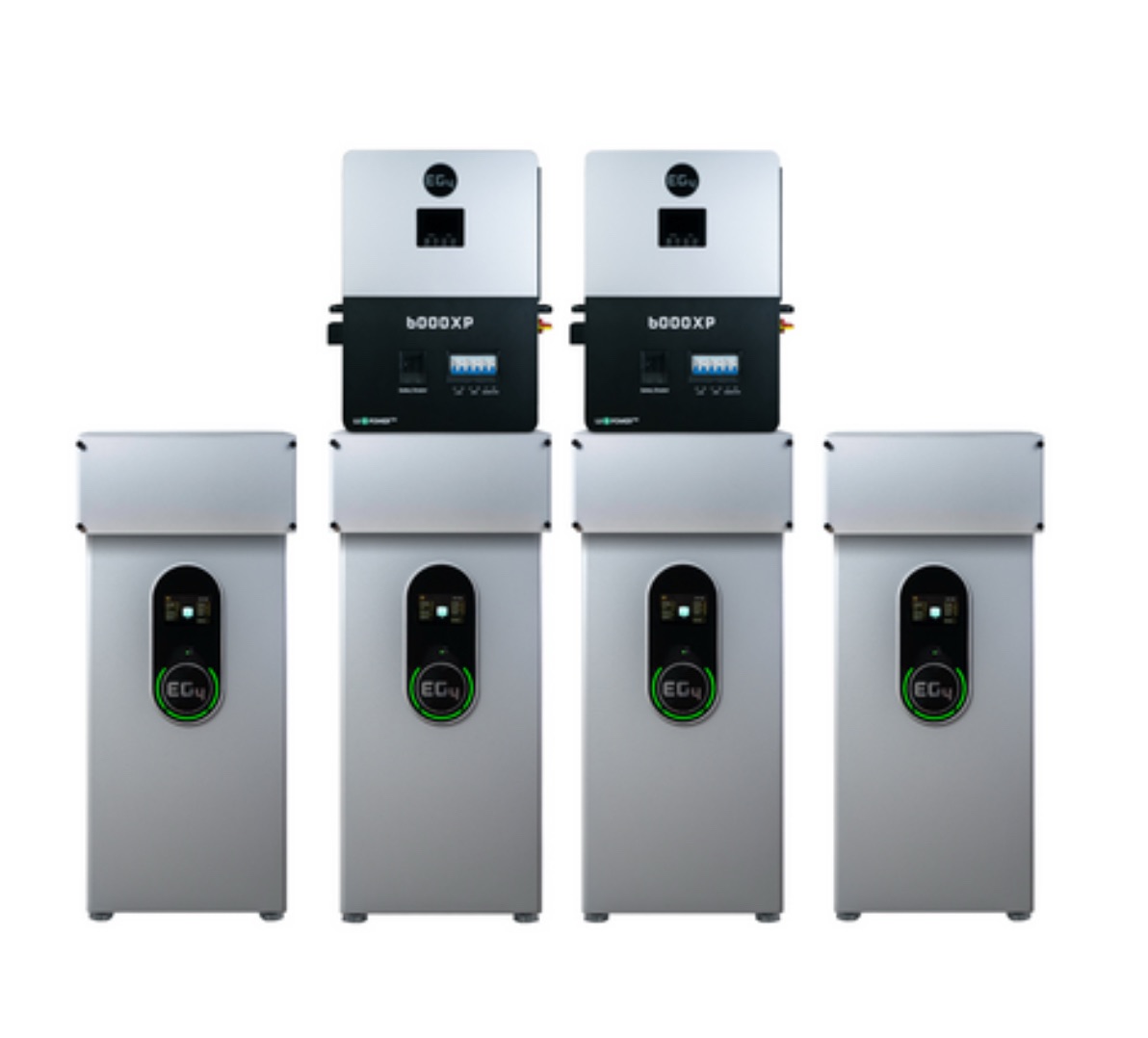
- Each inverter landed on its own 50 A DP breaker in the inverter combiner/load center.
- The #1 AWG feeder ran to the subpanel.
- The subpanel had a main/disconnect sized (and labeled) to protect the feeder at the appropriate rating (I used a 100–125 A rated main depending on AHJ guidance).
Conduit and raceway decisions
I ran exposed conduit along the utility-room wall, so I chose robust raceways rather than the flexible “ENT” blue coil you see at big-box stores. My decisions:
- Do not use ENT for exposed wall runs: ENT is intended mainly for concealed runs and does not provide mechanical protection in exposed locations.
- Use EMT or Schedule 80 PVC for exposed conduit runs. If a short flexible connection to the inverter is needed, use LFMC (liquid-tight flexible metal conduit) for the whip into the inverter.
- If the conduit is nonmetallic, I pulled a dedicated equipment grounding conductor (EGC) in the raceway because the conduit cannot serve as the grounding path.
Neutral/ground handling and labeling
Because the subpanel was a distribution subpanel and not the service equipment, I isolated the neutral bus from the ground bus and used a separate equipment-grounding bar. I also labeled the inverter-fed breakers and feeder per NEC/inspection expectations. Clear labeling made the inspector’s job easier and reduced back-and-forth.
Why I didn’t use 40 A breakers
At first I considered 40 A branch breakers because the nominal continuous math (6 kW ÷ 240 V = 25 A) might suggest it. However, the inverter’s supplied OCPD and pass-through capability make 40 A too small if you want the inverter to provide its full rated output. A 40 A breaker would have nuisance-tripped during pass-through. Because the inverter was listed for a 50 A output, I matched that with a 50 A branch breaker and #6 AWG conductors.
Worked conductor & breaker examples (quick reference)
| Location | Typical Load | Conductor (Cu) | Breaker |
|---|---|---|---|
| Each inverter output | Up to 50 A (pass-through) | #6 AWG | 50 A DP |
| Combined feeder (two inverters) | 100 A potential (×1.25 = 125 A) | #1 AWG | 100–125 A main / feeder (per AHJ) |
Backfeeding concerns and the common bus
I made sure the inverter breakers were the only sources connected to the inverter combiner/load-center bus. If the subpanel or downstream equipment could ever be powered by another source (generator, second inverter, utility feed to the same bus), I would have installed transfer switching or interlocks to prevent backfeeding the inverters. With the wiring I used, there was no other AC source on the inverter bus, so backfeeding risks were eliminated.
Inspection checklist I followed
- Printed the EG4 wiring/installation pages and brought them to the permit appointment.
- Installed each inverter on its own 50 A breaker and used #6 AWG for the branch wiring.
- Sized feeder to #1 AWG copper and protected it at the subpanel with an appropriately rated main/disconnect.
- Kept neutral and ground separate in the subpanel and pulled an EGC in nonmetallic conduit.
- Provided clear labels on all inverter breakers and feeder conductors.
Final thoughts
I built the system to be inspection-ready, following the EG4 guidance for inverter OCPD and the NEC rules for continuous loads. If you’re planning a similar install, verify the inverter nameplate/OCPD language, size breakers and conductors for combined outputs, pick durable conduit for exposed runs, and always isolate neutral and ground in subpanels.